
Legacy Group International

Author name: Raj Kapoor

Uncategorized

How You Can Improve Candidate Quality Without Increasing Costs (2026 Guide by Legacy Group)

If you’re running a recruiting firm today, you’re already feeling the pressure: The natural reaction?“We need to spend more on tools, more job boards, more sourcing.” At Legacy Group, we see this all the time. And here’s the truth: The firms that improve candidate quality the fastest aren’t the ones spending more They’re the ones operating smarter. Let’s show you where you might be losing candidate quality—and how you can fix it without increasing your costs. 1. Your Candidate Experience Is Your Real Brand You may think your brand is built through clients, but in reality, it’s built through candidates. Every message you send, every call you make, every follow-up you delay… it shapes how candidates perceive you. And in 2026, top candidates are selective. What you should focus on: 👉 Reality: If your candidate experience is average, your candidate quality will be too. 💡 At Legacy Group, we’ve seen firms improve response rates significantly just by upgrading how they communicate with candidates. 2. Stop Forwarding JDs. Start Reframing Opportunities. If you’re simply forwarding client job descriptions, you’re losing top talent. Because most JDs are not written to attract, they’re written to filter. What you should do instead: 💡 Instead of sending:“Looking for a candidate with X, Y, Z skills…” 👉 Try:“You’ll lead X initiative and directly influence Y outcome.” You’re not just sharing jobs, you’re selling opportunities. 3. Your Existing Database Is Your Biggest Advantage Before you start sourcing again, pause. Your best candidates may already be in your system. You should be actively using: 👉 Warm candidates respond faster, trust you more, and convert better. What you can do immediately: 💡 At Legacy Group, we’ve helped firms reduce sourcing effort by up to 40% just by leveraging their existing database better. 4. Screen Smarter, Not More Submitting more candidates doesn’t increase success; submitting better-fit candidates does. If you’re rushing submissions without proper screening, it impacts both quality and credibility. Upgrade your screening: 👉 Shift your focus: From “fast submissions” to “accurate submissions.” 💡 We’ve seen that when you reduce volume but improve screening, your interview-to-placement ratio improves significantly. 5. Speed Still Wins, but Only When It’s Structured Yes, speed matters. But unstructured speed creates chaos and low-quality submissions. Where you might be losing candidates: What you should fix: 👉 Structured speed gives you an edge without compromising quality. 6. Build Pipelines Before You Need Them If you start from zero every time a role opens, you’ll always be behind. Instead, focus on building ongoing talent pipelines. What this looks like for you: 👉 The best candidates aren’t actively applying; they’re being engaged over time. 💡 At Legacy Group, we consistently see better results for firms that invest in pipeline building versus reactive sourcing. Final Thought: Better Candidate Quality Starts With Better Systems You don’t need to increase your budget to improve candidate quality. You need to improve how you: When you fix these, better candidates follow naturally. Because in today’s market, you don’t win by doing more You win by doing it better. 🤝 How Legacy Group Can Support You At Legacy Group, we work closely with recruiting firms like yours to: 👉 If you want to identify where you’re losing top candidates,Start with a Sourcing & Delivery Audit. We’ll help you pinpoint the gaps and show you exactly how to fix them.

Uncategorized

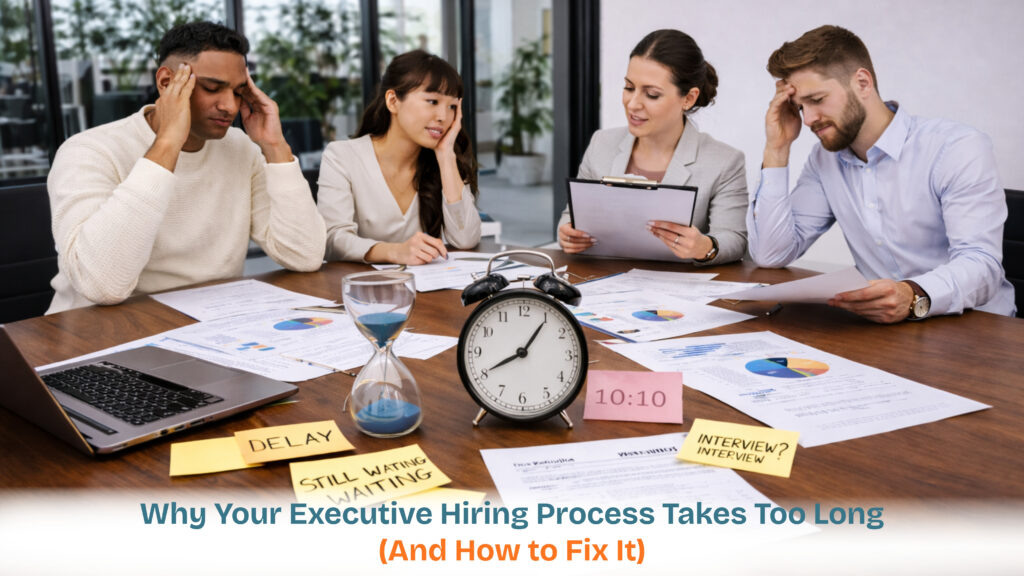
Why Your Executive Hiring Process Takes Too Long (And How to Fix It)

Speed is not a luxury; it’s a competitive advantage in 2026. But so many companies are still stuck in old, slow executive hiring processes that take months to complete. The consequence is missed opportunities, wasted top talent, and frustrated teams. Let’s take a look at what’s really holding your executive hiring process back and how to get it moving quickly. The Real Reasons Your Executive Hiring Process is Stuck 1. Too Many Decision-Makers, Not Enough Decisions When all stakeholders want input, it’s a never-ending cycle of approval. Clarity turns into confusion. 2. Undefined Role Expectations If your leadership position is not clearly defined, then you’ll continue to review candidates that “almost” qualify. Weeks will go by, but clarity is not on your horizon. 3. Old-School Sourcing Approaches Job boards are not the answer. Executive-level candidates aren’t applying; they’re being recruited. 4. Slow Interview Process Taking 5 to 7 rounds of interviews to find your next executive is a recipe for failure in today’s fast-paced business world. 5. Lack of Data-Driven Hiring Gut-feeling hiring is not only risky but also slow. Without clear metrics, decision-making is spotty. How to Fix It and Hire Faster 1. Build a Lean Decision Framework  Ensure that only 2 or 3 key stakeholders are involved in the hiring process. Determine this before commencing with the hiring process. 2. Define the Role Like a Product  Define the position as a product being launched. Determine the outcomes, KPIs, and metrics associated with it. 3. Go Proactive, Not Passive  Employ headhunting techniques, AI-based tools, and niche networks. The best candidates are already employed. 4. Compress the Interview Process  Move away from lengthy hiring cycles by using a 2 or 3-stage interview process. Respect the candidates’ time, and they will reciprocate. 5. Use Data and Predictive Insights  Employ tools that help in measuring leadership capabilities, cultural fit, and future performance. No more guesswork! The 2026 Hiring Mindset Shift Executive hiring is no longer about finding a person; it’s about finding an impact. The companies that succeed are agile and strategic, and deliver a premium candidate experience. The top executives of today’s companies are all about speed, simplicity, and purpose. If your hiring process is slow or antiquated, they’re not waiting around for you. Final Thought Your hiring process is a direct reflection of your business’s speed. If it’s slow, it looks like you’re slow. Eliminate inefficiencies, simplify decision-making, and prioritize executive hiring as a project rather than an administrative task. Because in today’s marketplace, the right talent isn’t waiting around.

Uncategorized

Why Top Candidates Drop Out Mid-Process (And How to Prevent It)

In 2026, hiring isn’t just competitive, it’s hyper-competitive. The best candidates aren’t just exploring opportunities; multiple companies are chasing them at once. So when a top candidate suddenly disappears mid-process, it’s not random; it’s a signal. And if you’re not paying attention, you’re losing talent silently. Let’s break down what’s really happening behind the scenes 👇 🚩 Why Top Candidates Drop Out 1. Your Hiring Process Feels Like a Marathon Top talent values speed. If your process has 5+ rounds, long gaps, or unclear timelines, candidates assume one thing: you’re not decisive. 👉 In 2026, candidates expect fast, frictionless hiring journeys, not outdated corporate loops. 2. Lack of Communication = Lack of Trust Candidates don’t just do ghosting; companies do it too. No updates. Delayed feedback. Generic emails. This creates doubt: And just like that, they disengage. 3. Your Employer Brand Doesn’t Match Reality Candidates do deep research now: If your brand promise doesn’t align with reality, candidates drop out quietly. 👉 Transparency is the new currency. 4. Competing Offers Move Faster Let’s be real, top candidates are rarely “available.” If another company: You lose. Simple. 5. Interview Experience Feels Cold or Robotic In a world driven by AI and automation, candidates crave human connection more than ever. If interviews feel: You’re not building emotional buy-in. ✅ How to Prevent Candidate Drop-Off ⚡ Speed Up Without Losing Quality Speed = respect in modern hiring. 💬 Communicate Like a Human, Not a System Candidates remember how you made them feel. 🌟 Build a Magnetic Employer Brand Authenticity wins in 2026. 🎯 Create a Candidate Experience, Not Just a Process Think like a marketer: Hiring is no longer HR-o, y  it’s candidate experience design. 🔥 Final Thought Top candidates don’t drop out because they’re “not interested.”They drop out because something better showed up faster, clearer, and more human. If you want to win top talent in 2026, stop thinking like a recruiter…Start thinking like a candidate-first brand.

Uncategorized

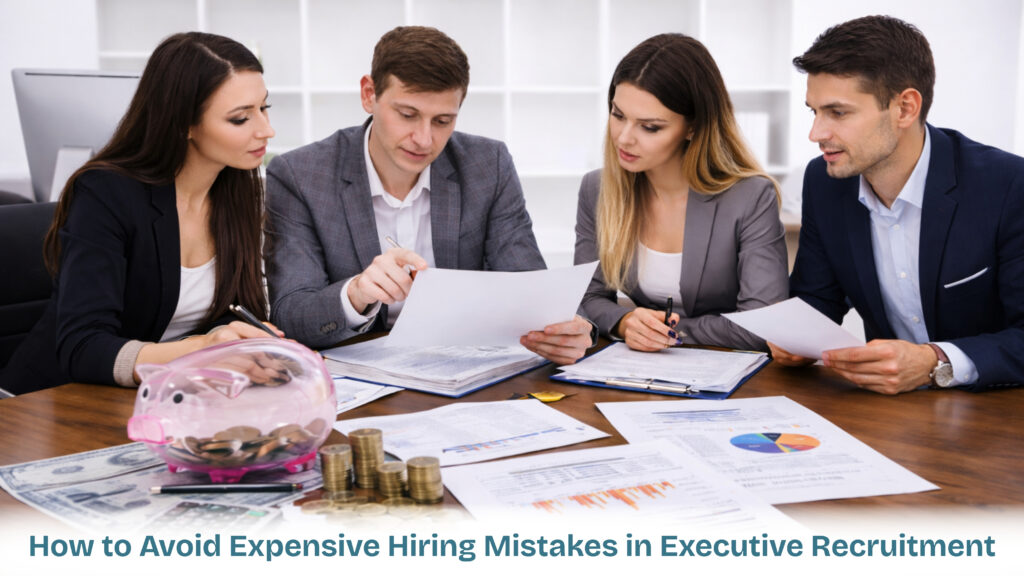
How to Avoid Expensive Hiring Mistakes in Executive Recruitment

Hiring a top executive isn’t just recruitment; it’s a high-stakes business decision. One wrong move can cost millions, damage culture, and stall growth. In 2026, where speed meets strategy, companies can’t afford outdated hiring approaches. Let’s break down how to avoid costly mis-hires and build leadership that actually drives results. 🔍 1. Stop Hiring for Experience Alone. Hire for Impact A polished resume doesn’t guarantee performance. Many companies still chase big titles and brand-name experience, but real success lies in measurable impact. What to do instead: 👉 The shift is from “Who have you worked for?” to “What have you built or fixed?” 🧠 2. Prioritize Culture Add Over Culture Fit “Culture fit” is outdated. It often leads to repetitive thinking and limits innovation. Modern approach: 👉 In 2026, diversity of thought is a competitive advantage. ⚡ 3. Don’tRush, but Don’t Drag Speed matters, but rushed hiring is one of the biggest mistakes in executive recruitment. Balance it right: 👉 The best candidates are off the market in weeks, not months. 📊 4. Use Data-Driven Hiring, Not Gut Feeling Hiring based on instinct alone is risky. Smart companies now blend human judgment with data. Leverage tools like: 👉 Data reduces bias and increases the probability of long-term success. 🤝 5. Align Stakeholders Early One of the most expensive mistakes? Internal misalignment. Fix this by: 👉 Clear alignment avoids last-minute confusion and bad hires. 🚀 6. Partner with Specialized Recruiters Executive hiring is not a DIY project. It requires deep networks and market insight. Why it matters: 👉 The right partner doesn’t just fill a role; they build leadership pipelines. Final Thought Executive hiring isn’t about filling a position; i t’s about shaping the future of your company. In a world driven by agility, innovation, and leadership clarity, avoiding these mistakes can be your biggest competitive edge. Hire smarter. Think long-term. Lead stronger.

Scroll to Top